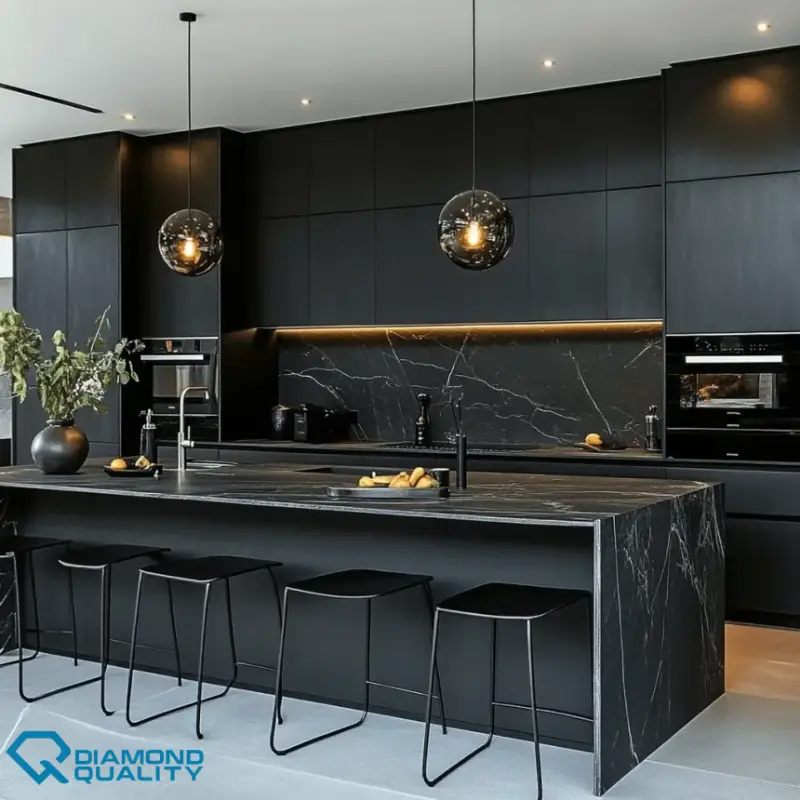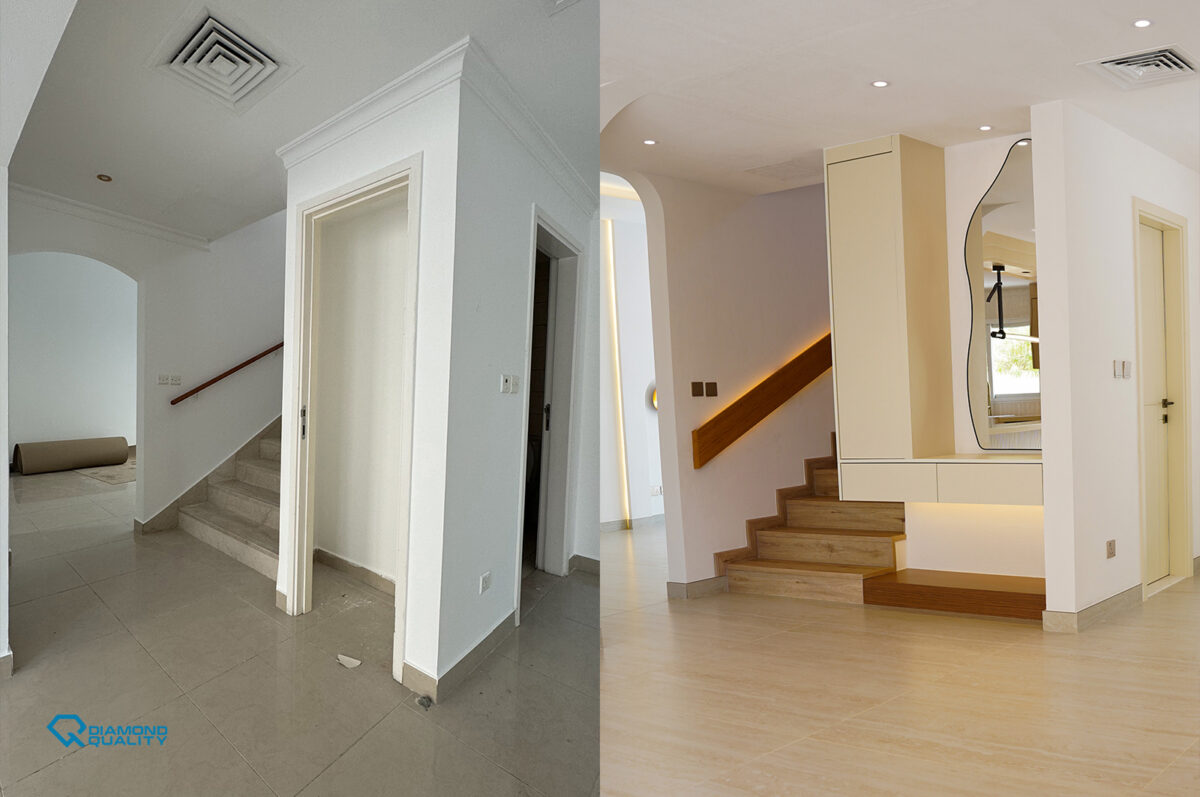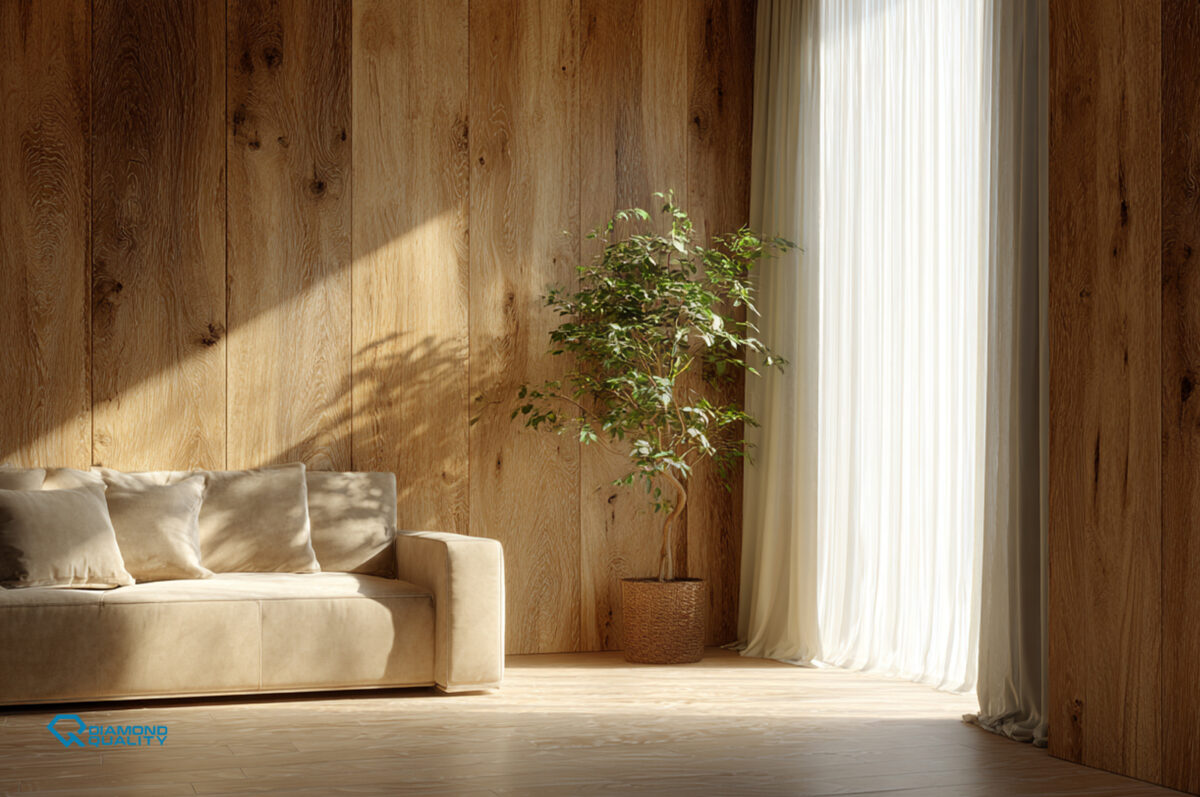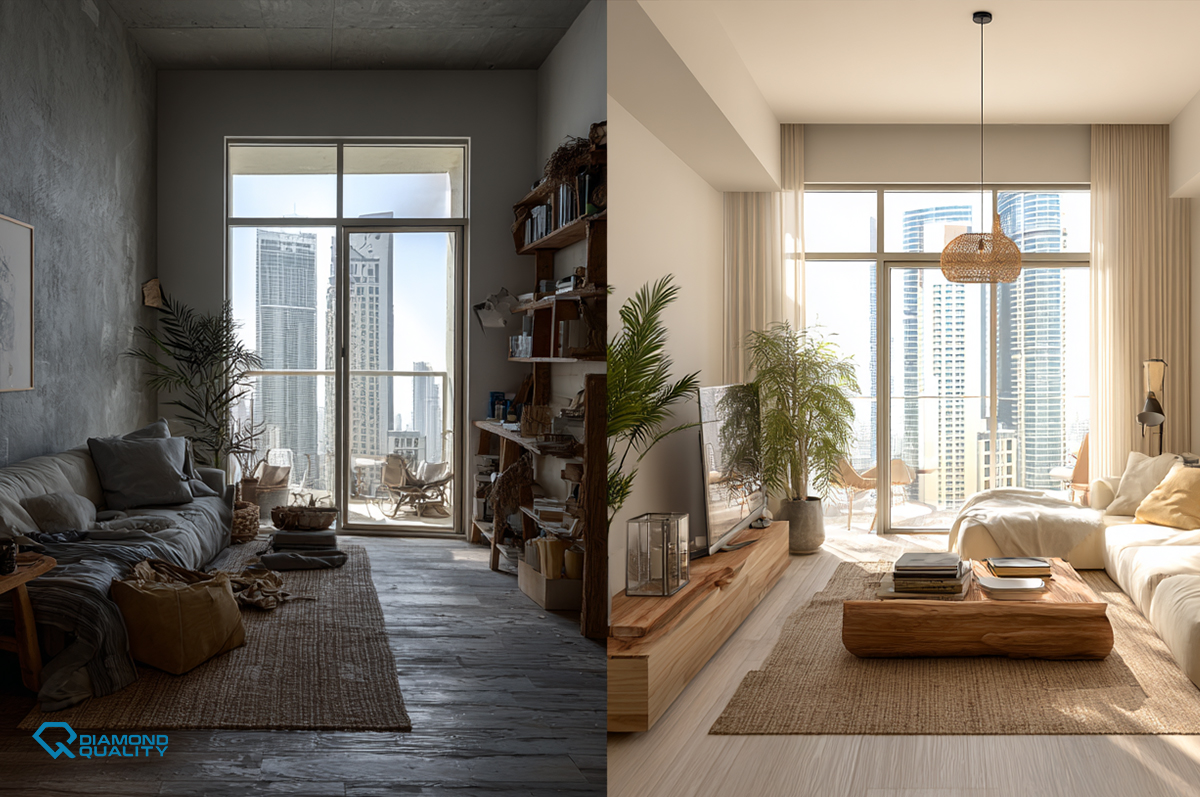
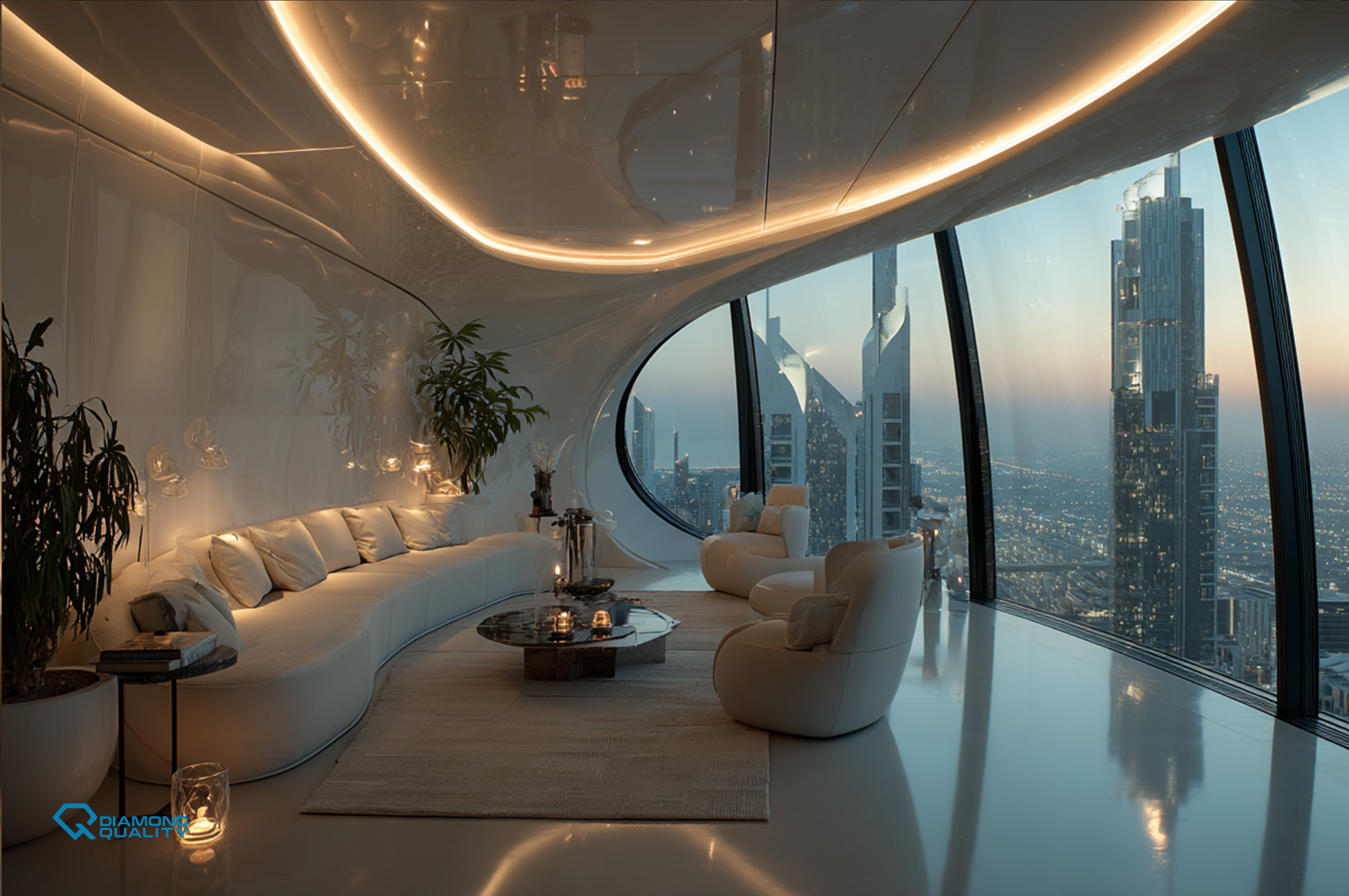
Dubai has always been a city of vision. From iconic landmarks like the Burj Khalifa to futuristic projects such as the Museum of the Future, the city continues to push the boundaries of design and innovation. By 2030, Future Interior Design in Dubai 2030 will reflect not only luxury and modernity but also technology, sustainability, and cultural identity.
The city’s Vision 2030 agenda is reshaping the way architects and interior designers approach projects. It emphasizes a future where living and working spaces are not only stylish but also intelligent, eco-conscious, and culturally connected. Interiors will become more personalized, adaptive, and immersive than ever before.
This transformation is particularly relevant for homeowners, entrepreneurs, and businesses in Dubai. Whether it’s a villa in Palm Jumeirah, a corporate office in Business Bay, or a hospitality project in Downtown Dubai, the future of interiors will define how people live, work, and interact.
At Diamond Quality, we view this transformation as an opportunity to merge creativity with cutting-edge innovation. In this article, we explore the top trends shaping the Future Interior Design in Dubai 2030, showing how they will influence homes, offices, and commercial spaces in the years to come.

Smart & AI-Driven Interiors
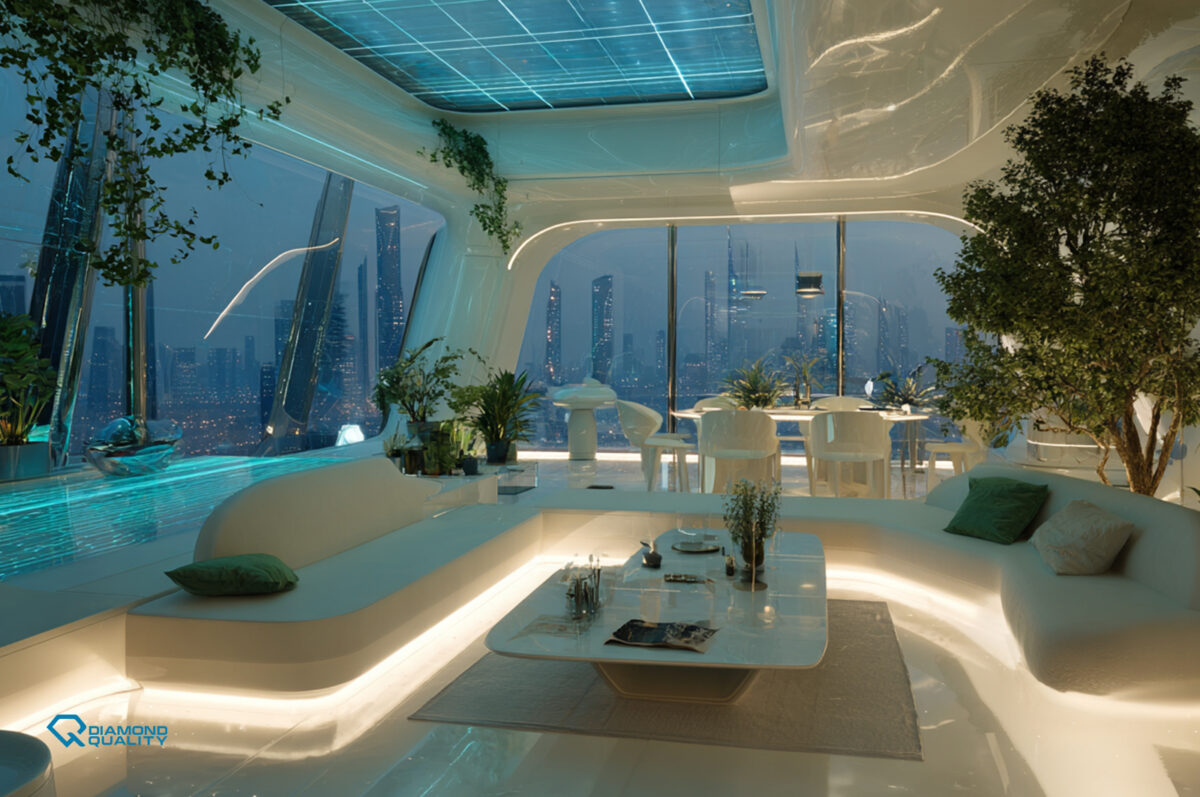
Technology has already become an integral part of daily life in Dubai, but by 2030, it will take interiors to a whole new level. Future Interior Design in Dubai 2030 will be defined by AI-powered systems that personalize environments based on individual needs. From lighting and temperature to entertainment and work settings, spaces will adapt seamlessly through intelligent automation.
Imagine walking into your office, where the lighting adjusts to your mood, the desk height changes automatically to match your preferences, and holographic displays replace traditional screens. These are no longer science fiction—they represent the next stage of design evolution in Dubai.
Residential spaces will also benefit from AI-driven design. Homes will feature smart kitchens that suggest recipes based on available ingredients, living rooms with interactive digital panels, and bedrooms that track sleep quality to create optimal conditions. Every corner will be built for efficiency, comfort, and personalization.
For businesses, AI-driven interiors will mean improved collaboration, energy savings, and a futuristic brand identity. Dubai’s positioning as a smart city ensures that AI integration in design is not just a trend, but a necessity for staying ahead in the global market.
Sustainability & Circular Design
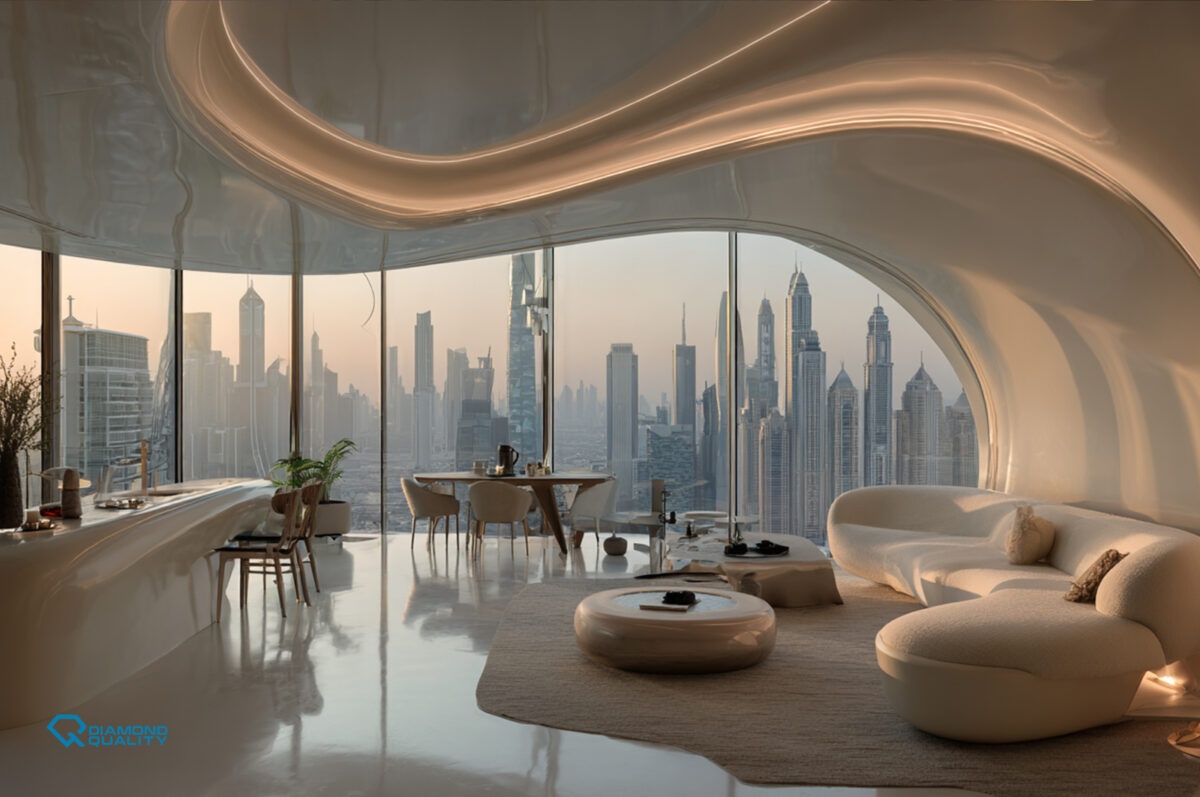
Sustainability will no longer be an optional consideration—it will be the foundation of Future Interior Design in Dubai 2030. With the UAE’s focus on achieving carbon neutrality, interior designers will embrace eco-friendly and circular design principles at every level.
Materials will shift towards recycled wood, bio-based composites, and carbon-neutral finishes. Furniture will be designed with modularity and longevity in mind, ensuring minimal waste. Energy-efficient lighting, solar integration, and water-saving fixtures will become standard in both residential and commercial projects.
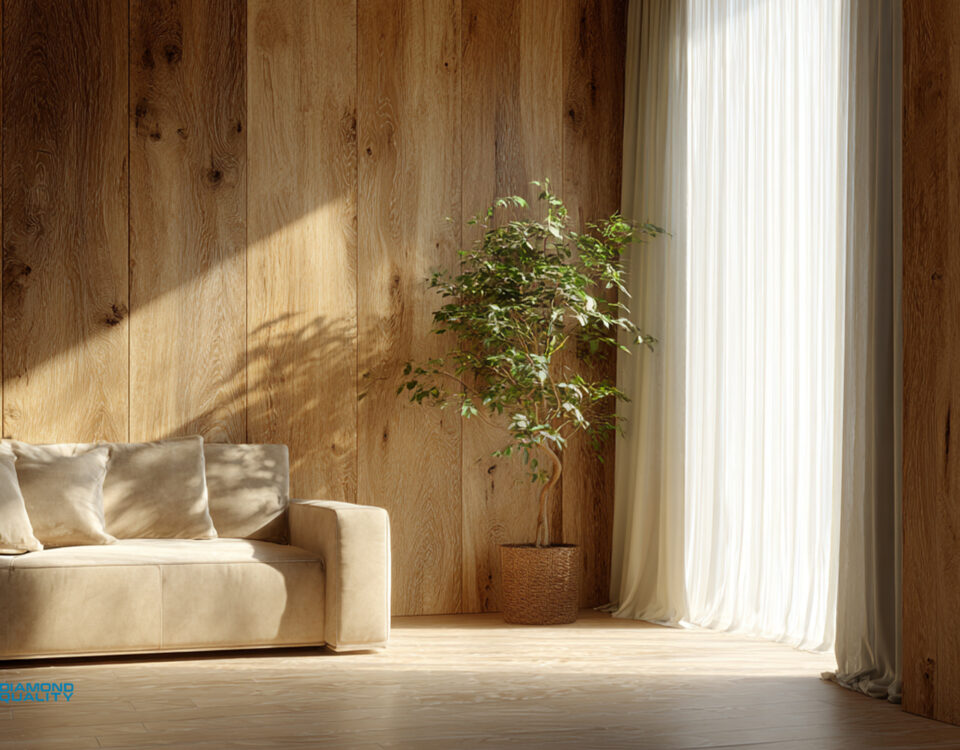
Biophilic design—bringing nature indoors—will play an even bigger role. Expect to see interiors filled with green walls, indoor gardens, and natural ventilation systems that reduce reliance on artificial climate control. These features not only save resources but also enhance well-being and productivity.
The future of sustainable design in Dubai will align with Vision 2030, ensuring that homes, offices, and hospitality spaces are both environmentally responsible and luxurious. This approach creates harmony between modern lifestyle demands and long-term ecological balance.

Cultural Evolution & Global Fusion
While technology and sustainability will dominate headlines, cultural heritage will remain a cornerstone of Future Interior Design in Dubai 2030. Dubai’s strength lies in its ability to blend Arabic tradition with global design trends, creating interiors that are both modern and deeply rooted in identity.
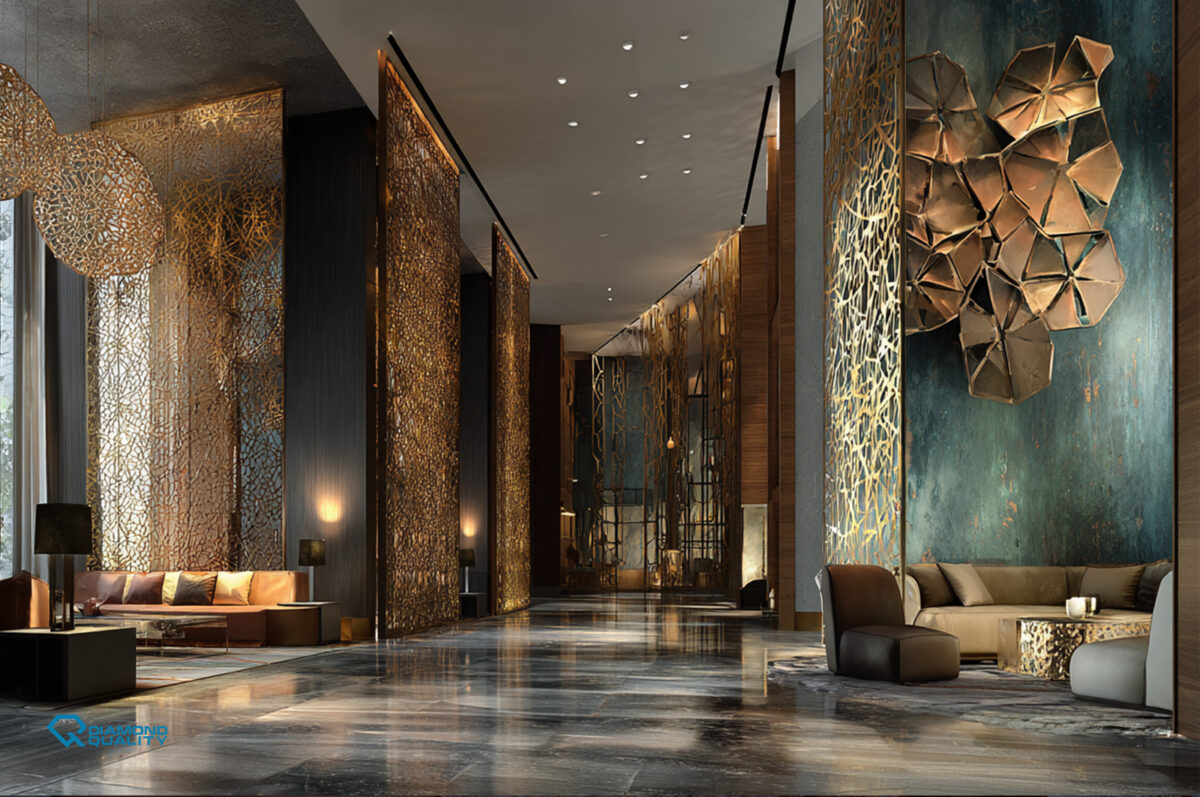
Expect to see modern apartments and offices incorporating mashrabiya-inspired partitions, Islamic geometric art, and natural stone finishes alongside sleek, futuristic furniture. This creates a balance between authenticity and innovation, giving spaces a sense of belonging.
Cultural storytelling will also expand in hospitality and retail interiors. Hotels may showcase modern reinterpretations of Arabic calligraphy, while restaurants may blend traditional patterns with cutting-edge lighting to create immersive dining experiences. Such fusion ensures Dubai remains a global leader in design diversity.
For international clients, this cultural integration adds value by making spaces more unique, memorable, and tied to the spirit of Dubai. The ability to merge global minimalism with regional traditions will define the identity of interiors by 2030.
Metaverse & Virtual Interiors
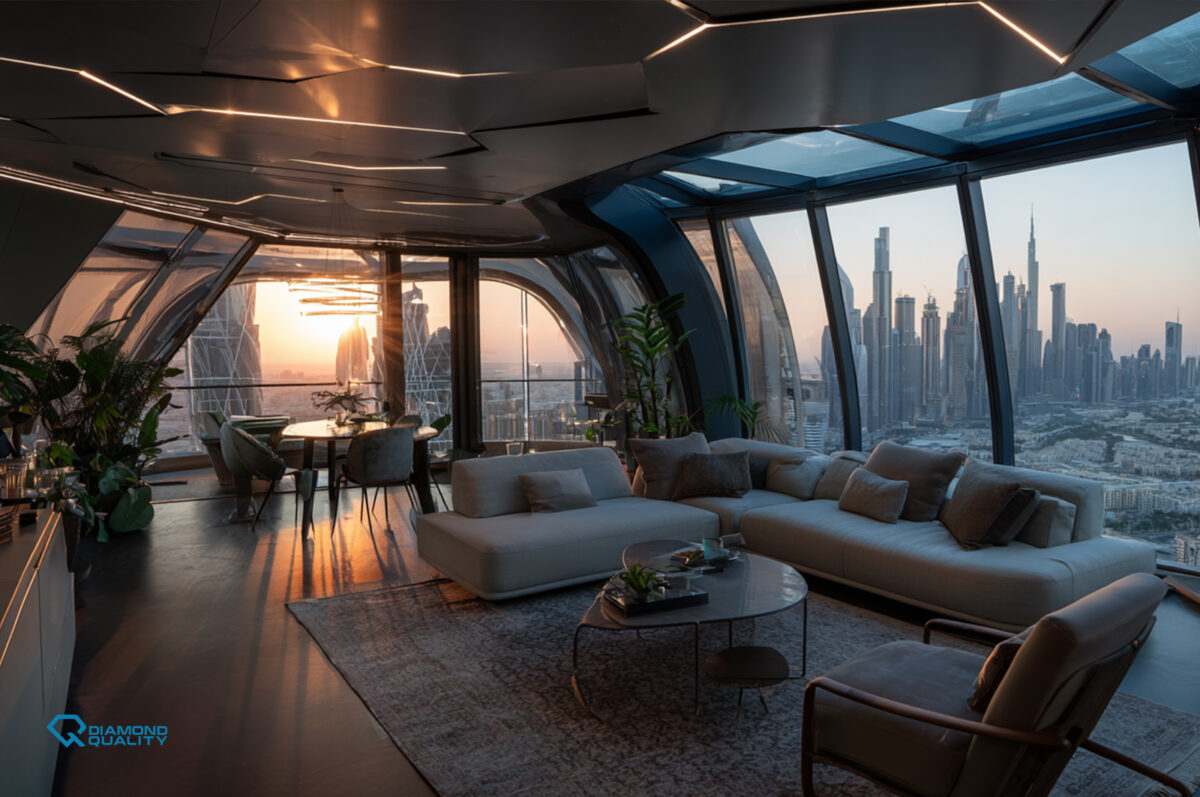
By 2030, digital living will be just as important as physical living. The rise of the metaverse will transform how people experience and interact with interiors. Future Interior Design in Dubai 2030 will not only focus on physical spaces but also their digital twins—virtual replicas that exist in immersive environments.
Imagine hosting a business meeting in a virtual office designed to reflect your brand, or showcasing a retail store where customers can shop through VR headsets before visiting in person. These hybrid experiences will redefine commercial interiors and customer engagement.
Homeowners, too, will benefit from virtual interiors. They will be able to customize layouts, change furniture, and test different designs digitally before making physical changes. This reduces cost, waste, and design uncertainty, creating a more efficient design process.
Dubai’s position as a leader in innovation makes it the perfect hub for metaverse interiors. For brands and individuals alike, merging virtual and physical design will be essential for creating future-ready spaces.
Residential Futures
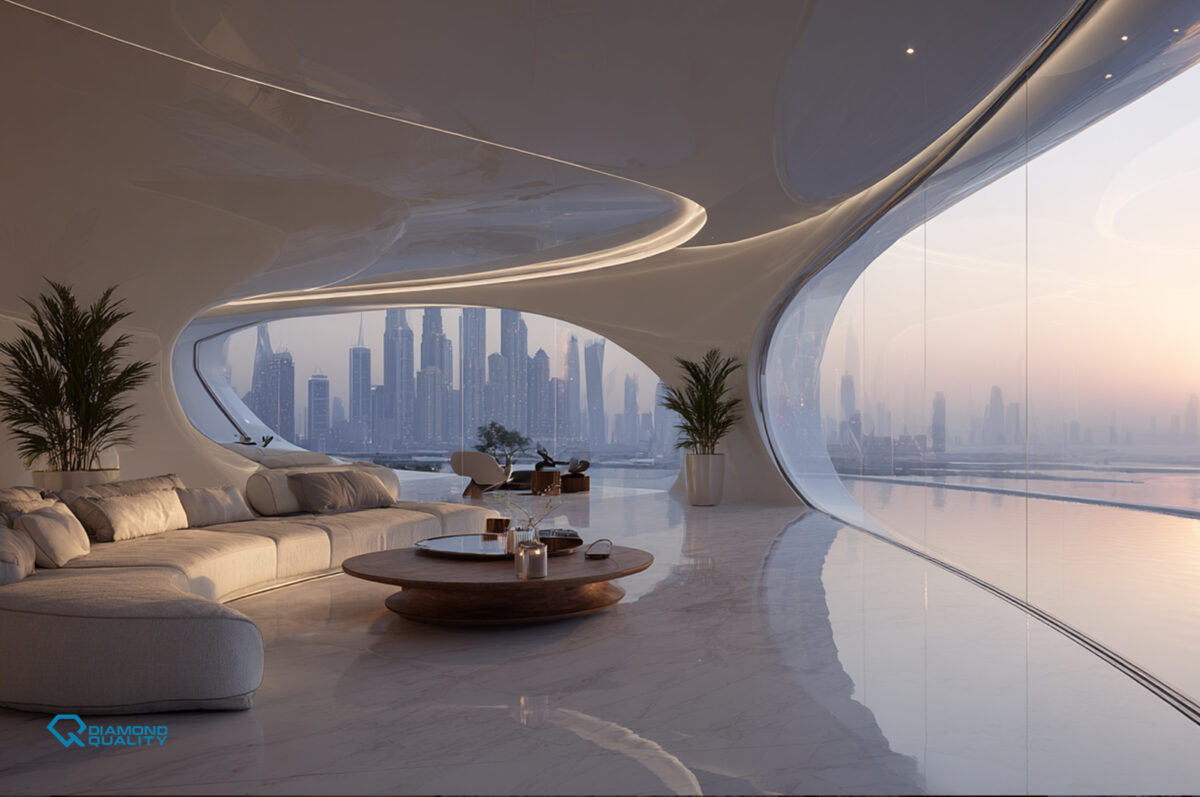
Dubai’s residential interiors are set to become more modular, adaptive, and personalized by 2030. Apartments and villas will feature flexible layouts that can shift depending on family needs, lifestyles, and technological integration.
Living rooms may double as home theaters with retractable screens, while dining areas can transform into co-working spaces. Bedrooms will integrate sleep-enhancing technologies and modular furniture, ensuring every square meter is optimized.
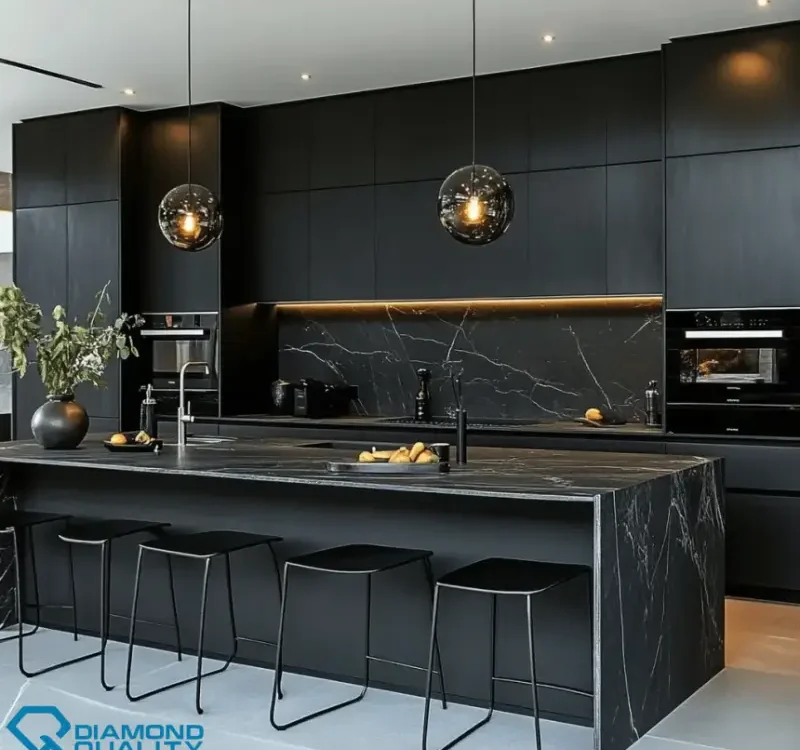
Kitchens will evolve into smart, multifunctional hubs. With AI assistance, they will track inventory, recommend recipes, and even automate cooking processes. This approach ensures that daily life is both convenient and efficient.
In essence, Future Interior Design in Dubai 2030 will transform homes into adaptable environments that anticipate and respond to resident needs, combining luxury with functionality at every level.
Commercial & Hospitality Futures
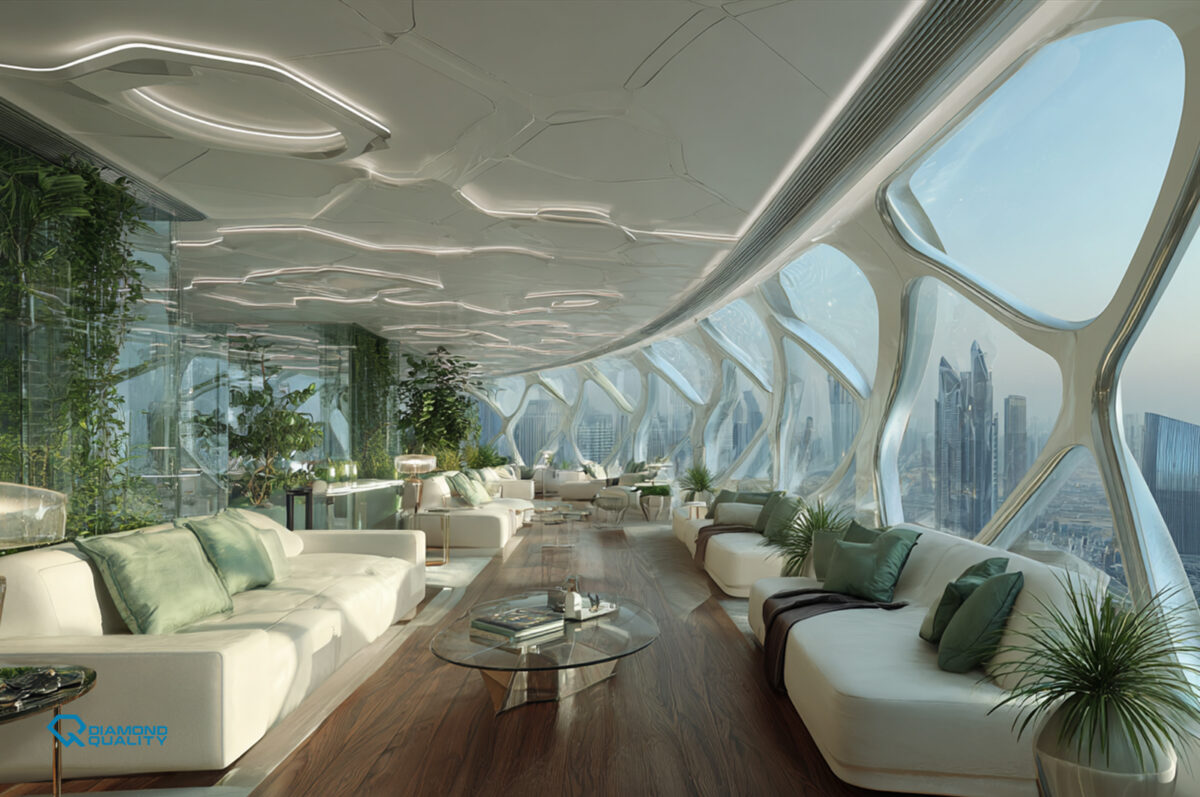
Dubai’s global reputation as a business and tourism hub means commercial and hospitality interiors will evolve rapidly by 2030. Offices will become border less, with open layouts supported by advanced digital collaboration tools. Meeting pods will feature holographic interfaces, allowing seamless hybrid work across the globe.
Hotel lobbies will transition into multi functional spaces that blend co-working areas, cultural showcases, and social hubs. Restaurants will emphasize experiential design—integrating immersive lighting, cultural motifs, and sustainability in every detail.
Retail will be re-imagined with digital-physical integration. Stores will allow customers to shop through AR and VR experiences, while physical layouts will prioritize sustainability and flexibility.
These shifts will make Dubai’s commercial and hospitality interiors not just functional but also memorable, ensuring they stay ahead in the competitive global market.

Diamond Quality’s Vision for 2030
At Diamond Quality, we believe the Future Interior Design in Dubai 2030 is not about predicting trends—it’s about shaping them. Our team combines experience, creativity, and innovation to deliver interiors that are timeless yet future-ready.
We integrate smart technologies into every project, ensuring spaces adapt to user needs. Our focus on sustainability aligns with the UAE’s environmental goals, while our cultural sensitivity guarantees authenticity in every design.
Our portfolio includes residential, commercial, and hospitality projects that reflect Dubai’s global and cultural identity. Each project is tailored to client visions, combining modern functionality with aesthetic excellence.
Looking ahead to 2030, we see interiors as ecosystems—spaces where technology, nature, and culture work together to create experiences that inspire and endure.
Key Future Trends in Dubai Interior Design 2030
| Trend | Description | Impact |
|---|---|---|
| Smart & AI-Driven Interiors | AI-powered systems, adaptive environments | Personalization & efficiency |
| Sustainability & Circular Design | Recycled materials, carbon-neutral projects | Eco-conscious luxury & long-term savings |
| Cultural Global Fusion | Arabic heritage with global minimalism | Authenticity & unique identity |
| Metaverse Integration | Virtual spaces & digital twins | Hybrid living & brand innovation |
| Residential Futures | Modular homes & smart kitchens | Flexible living for modern lifestyles |
| Commercial Futures | Smart offices, multifunctional hospitality spaces | Global competitiveness & enhanced experiences |
Comparing 2020 vs 2030 Interior Design Trends in Dubai
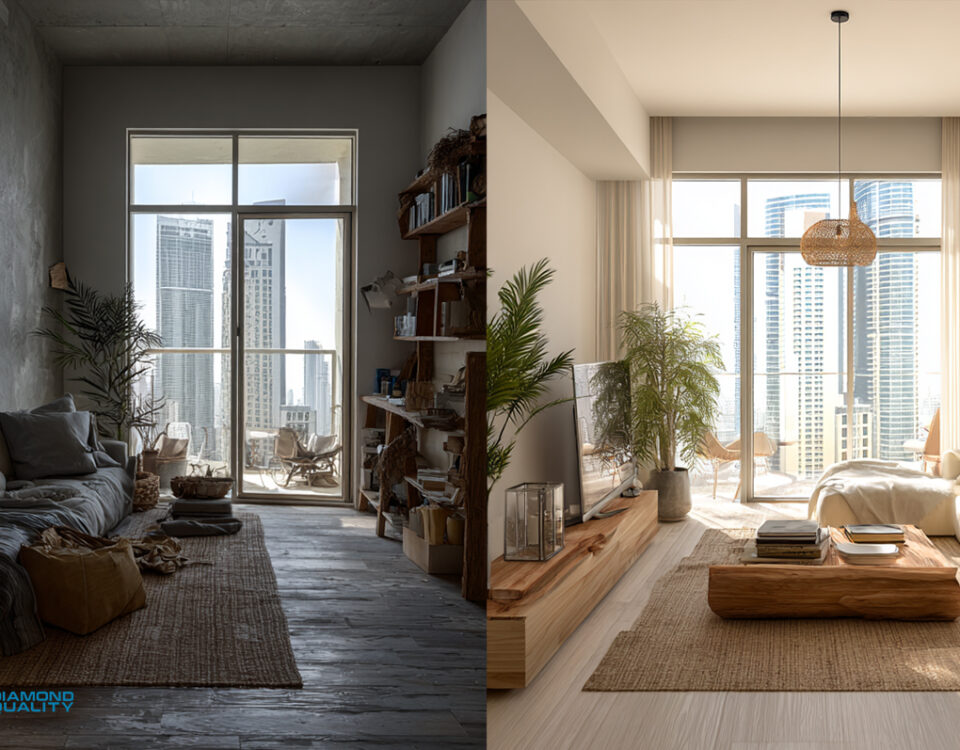
The journey from 2020 to 2030 highlights just how fast Dubai is evolving in the design world. In 2020, the focus of interiors was on minimalism, open-plan layouts, and luxury finishes such as marble and brass. Smart technologies were present but often limited to lighting or temperature control, while sustainability was only beginning to influence material selection.
By contrast, Future Interior Design in Dubai 2030 will be far more advanced, merging technology, sustainability, and cultural authenticity. AI-driven environments will personalize every aspect of living and working, sustainability will become a non-negotiable standard, and cultural storytelling will play a much stronger role in commercial and hospitality spaces.
The difference is also visible in scale. Where 2020 interiors highlighted luxury aesthetics, 2030 interiors will prioritize smart ecosystems—where furniture, lighting, and technology all interact seamlessly. The shift represents Dubai’s broader vision: from design that looks beautiful to design that functions intelligently and sustainably.
This comparison underlines how forward-thinking companies and homeowners must be if they want to stay aligned with Dubai’s future. Investing in 2030-ready design today ensures not only modern comfort but also long-term relevance.
Tracking Global Predictions in Interior Design
Staying updated with international design forecasts is essential for understanding how Dubai aligns with global innovation. Renowned platforms regularly publish insights into the future of interiors, offering benchmarks that influence Dubai’s design scene.
Websites like Dezeen, ArchDaily, and Design Middle East provide deep dives into cutting-edge design projects and predictions for future interiors. These platforms cover topics ranging from AI-powered homes to sustainable hospitality spaces, making them vital resources for design professionals and enthusiasts.
By continuously monitoring such platforms, Dubai’s interior design community can ensure its trends remain globally competitive while staying true to local culture. For Diamond Quality, keeping track of these predictions is not just research—it is a commitment to delivering interiors that are both innovative and internationally recognized.
This global perspective ensures that the Future Interior Design in Dubai 2030 does not exist in isolation but evolves as part of a broader movement that balances luxury, sustainability, and smart living worldwide.
Conclusion
By 2030, Dubai will not only set the benchmark for architecture but also for interior design. The Future Interior Design in Dubai 2030 will be defined by smart technologies, sustainability, cultural fusion, and immersive virtual experiences.
Homes will become adaptive sanctuaries, offices will be intelligent ecosystems, and hospitality spaces will turn into cultural hubs. For residents, entrepreneurs, and visitors, interiors will play a central role in shaping daily life.
At Diamond Quality, we are committed to leading this transformation. Whether designing for families, businesses, or commercial brands, our vision ensures interiors that are both future-proof and deeply connected to Dubai’s identity.
👉 Explore our future interior design services or contact us today to bring your vision of 2030 to life.